Spacecraft & Propulsion / EXPLAINER
How Spacecraft Stay Cool Without Air to Carry Heat
Explore spacecraft thermal control through radiators, insulation and operating schedules, with a simple way to read the heat budget behind a mission.

Cold space does not remove heat on demand
A spacecraft can face a cold view of space while its electronics still need cooling. The useful question is not whether space is cold in an everyday sense, but how energy moves from a component to somewhere else. A processor producing heat needs a path through its mounting and thermal hardware before that energy can leave the vehicle. Describing the surroundings alone does not describe that path.
NASA's small-spacecraft thermal-control survey distinguishes passive technologies from active equipment. It includes insulation, conductive paths, radiating surfaces and heaters among the design tools. Their jobs differ. Insulation reduces unwanted exchange; a radiator provides a controlled surface for rejecting heat. A heater may still be needed when an instrument is inactive or its environment changes. Thermal control means staying within an acceptable range, not making the entire vehicle as cold as possible.
Follow one watt through the vehicle
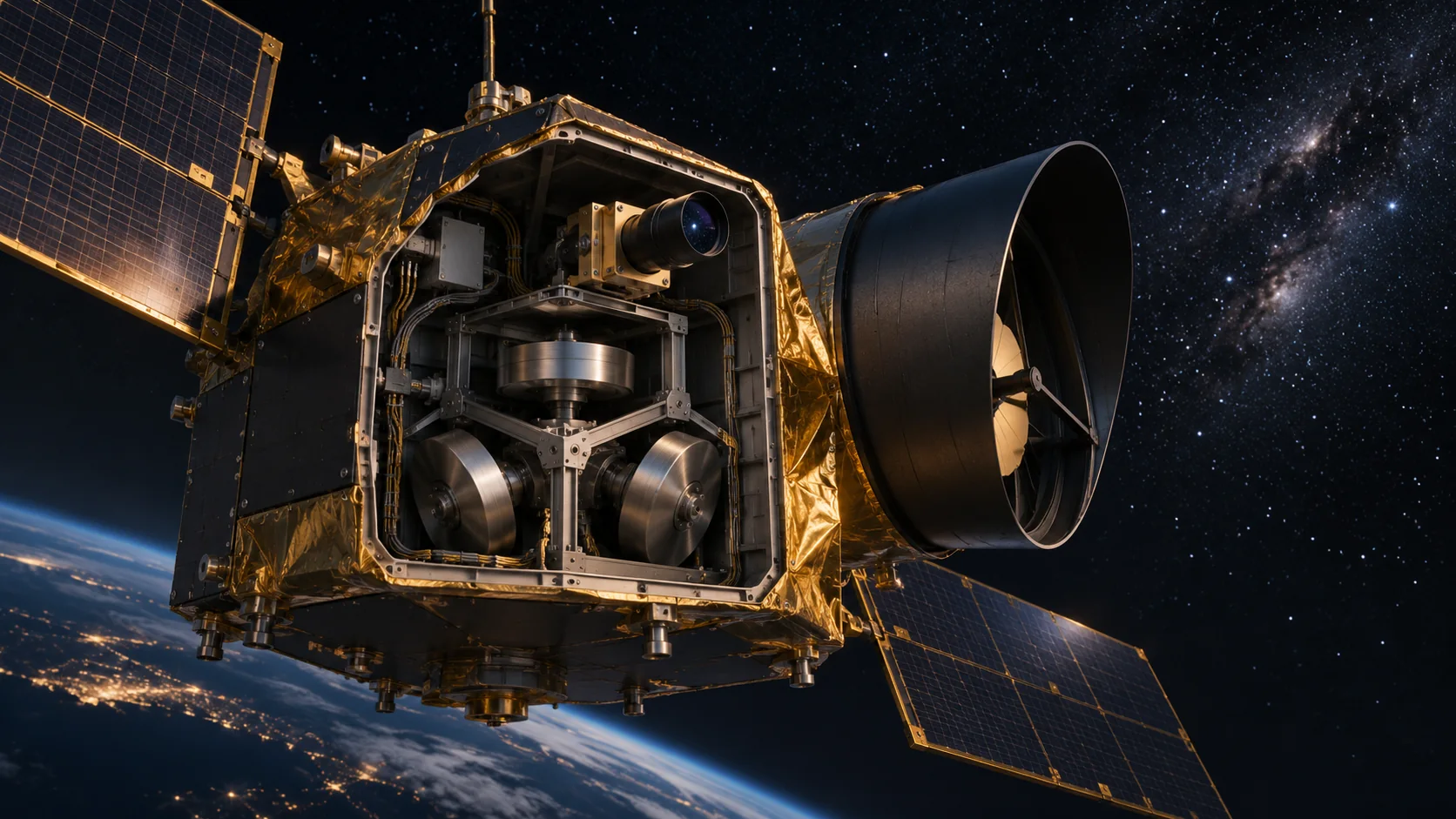
As an original design exercise, picture a camera attached to an instrument deck. During imaging it consumes electrical power, some of which becomes heat. Trace a route from the camera housing, through its interface, to a heat-rejection surface. Now mark each boundary where the route might be interrupted by a poorly chosen material, a small contact area or an unexpected configuration change.
This sketch explains why adding a larger radiator does not automatically fix a hot instrument. If energy cannot reach that radiator effectively, the instrument can remain too warm while the radiator has unused capacity. Conversely, an excellent conductive connection may cool a component excessively during a quiet phase. Thermal engineering must account for both operating states. A component specification and a radiator area are endpoints of an argument; the connection between them is where much of the design work lives.
The view from the radiator matters
NASA's explanation of onboard systems describes spacecraft as collections of interacting subsystems. That perspective is especially useful for thermal control. A surface that rejects heat must coexist with solar arrays, antennas, instruments and the directions those devices need to face. Pointing decisions can therefore alter the thermal situation, even when the electronics are running exactly the same software.
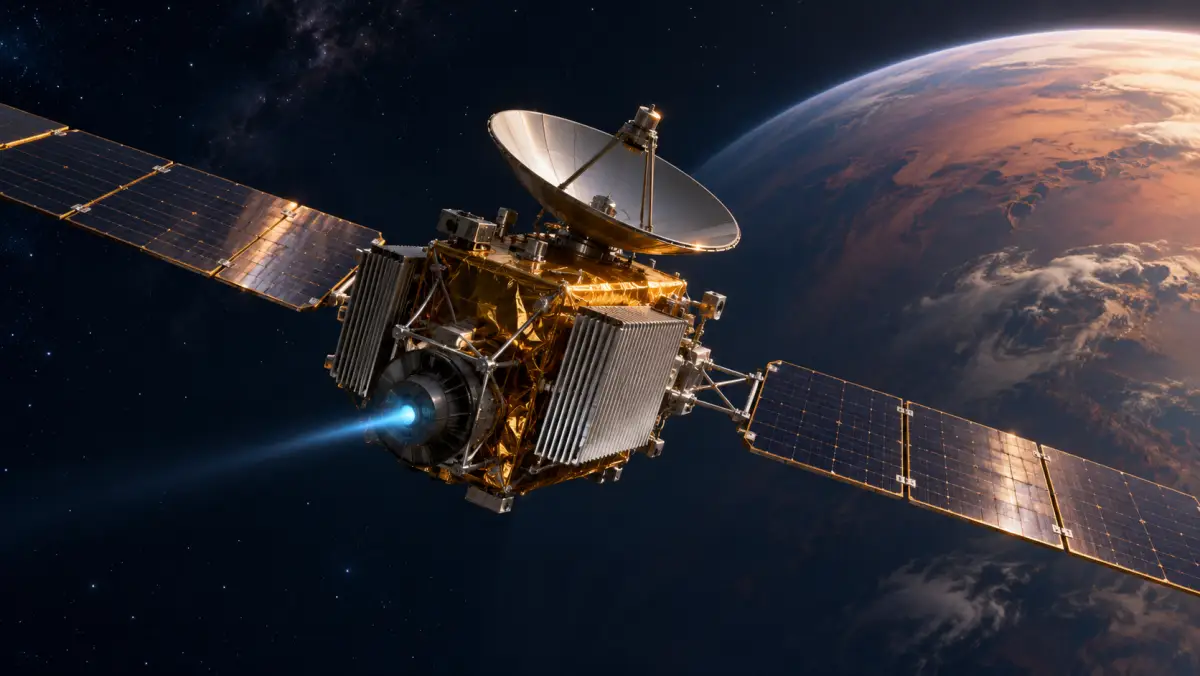
Imagine a fictional mapping probe that spends one part of its orbit observing a world and another part communicating. Its radiator may see different surroundings during those attitudes. A design review should compare the complete configurations rather than average them into one pleasant temperature. The exercise does not require us to assign invented performance to real hardware. It only requires recognizing that a spacecraft's orientation and activity are part of its thermal boundary conditions.
Power schedules can become heat schedules
Take a hypothetical payload with two instruments that each add a substantial heat load. Running them together may produce the most data per minute, but alternating them might keep a critical part within its allowed range. The useful comparison includes the observation opportunities lost during alternation and the mass or complexity required to support simultaneous operation. Neither choice is universally preferable.
This is also why a brief successful demonstration may be insufficient evidence for sustained operation. A short test can end before temperatures settle or before heat reaches a sensitive neighboring component. A meaningful report states the operating duration and conditions. Readers need not calculate an entire thermal model to spot the omission. They can ask whether the proposed duty cycle was represented and whether the test covered the transitions between active and quiet periods.
Read a thermal claim as a complete chain
When a mission advertises a powerful computer, a sensitive detector or an extended lifetime, look for the conditions that make that capability usable. What produces heat? How is it transported? Where is it rejected? Which components also need protection from becoming too cold? What changes when the vehicle turns, enters shadow or stops observing? These questions connect a headline specification to an operational spacecraft.
A helpful final exercise is to annotate a conceptual vehicle with arrows for energy flow and a short schedule of activities. If an arrow ends inside the drawing, the heat-rejection argument is unfinished. If the schedule assumes every subsystem reaches its peak simultaneously, compare that assumption with the intended operations. Spacecraft thermal control is an exercise in balancing flows over time. Its success is visible not in an especially cold machine, but in instruments that remain stable enough to do their work.
Sources & further reading
Primary sources behind this article. Illustrative scenarios and design judgments are identified in the text.