Robotics / EXPLAINER
What a Free-Flying Robot Can Do Inside a Space Station
Explore how station robots can provide movable cameras and research platforms, and why useful autonomy includes docking, clear routes and human attention.
FREE EXCERPT
A movable viewpoint can be a useful tool
A robot inside a space station does not need hands shaped like a person's to do useful work. Sometimes the valuable task is placing a camera where an operator needs a view and holding it there without occupying an astronaut. This modest description offers a clearer starting point than imagining an all-purpose mechanical crewmate.
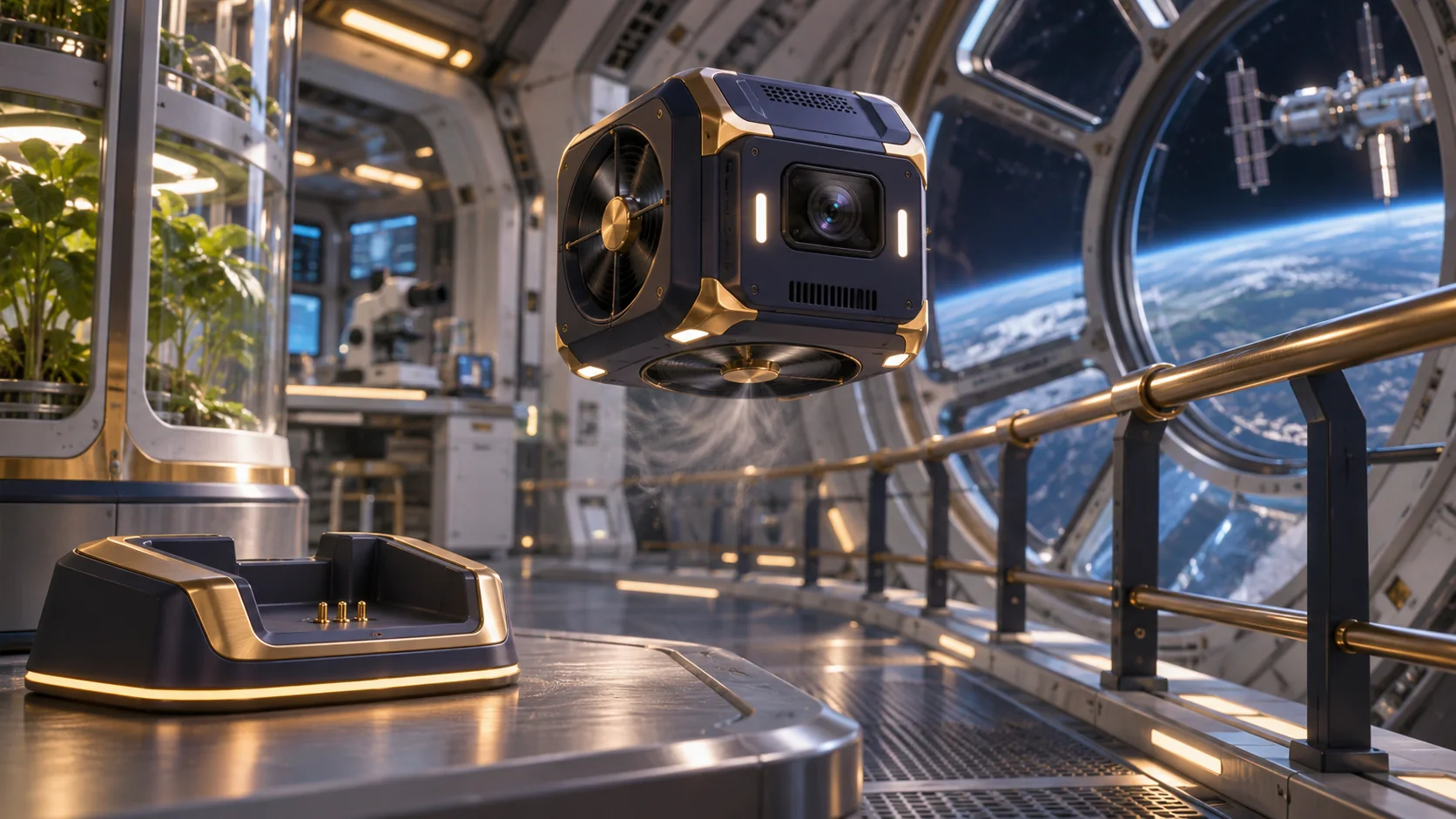
NASA's Astrobee overview describes cube-shaped robots using electric fans to move inside the station, with cameras and sensors for navigation and a docking station for recharging. NASA's research summary also describes autonomous docking, perching and remote operation. These capabilities belong to a platform for experiments and assistance. Their value should be assessed through the particular activity they support, rather than through a broad promise that robots will replace every routine task in orbit.
Continue with a paid membership
This full article is included with Explorer, Researcher or Architect.