Planetary Defense / EXPLAINER
What DART Teaches Us About Pushing an Asteroid Aside
DART demonstrated asteroid deflection, but the result depends on more than a collision. Explore momentum, ejecta and the evidence needed for another target.

FREE EXCERPT
The test changed a real orbit
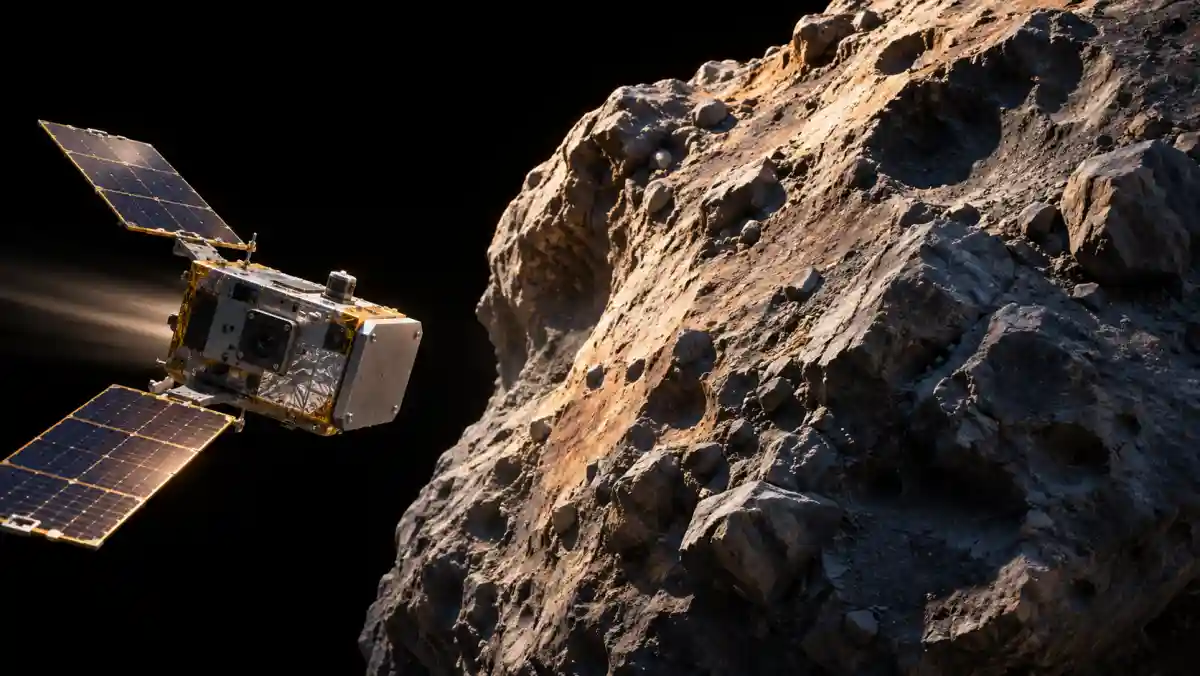
NASA's DART mission demonstrated that deliberately striking an asteroid could alter its motion. The target, Dimorphos, orbits the larger asteroid Didymos. Measuring a change in that mutual orbit gave researchers evidence that went beyond a dramatic impact image. The experiment connected a known spacecraft encounter with an observable dynamical result.
NASA's early results also emphasized material ejected by the impact. That material contributed to the momentum exchange, making the event more complicated than a spacecraft simply sticking to the target. The lesson for future planning is not that every asteroid will respond identically. It is that an impact can be studied as a physical process whose effectiveness depends on the target, the encounter and the material that leaves the surface.
Continue with a paid membership
This full article is included with Explorer, Researcher or Architect.