Astrobiology / EXPLAINER
How Ocean-World Samples Could Lose Their Best Clues
An ocean-world sample changes as it travels to an instrument. Follow the collection chain to see why context and handling matter in the search for life.

FREE EXCERPT
The instrument never meets an abstract ocean
A mission searching for life on an icy moon must measure specific material delivered in a specific condition. The material may come from a plume, a surface deposit or a future system designed to penetrate ice. Each route connects the instrument to the ocean through a different history. That history can affect what a result means.
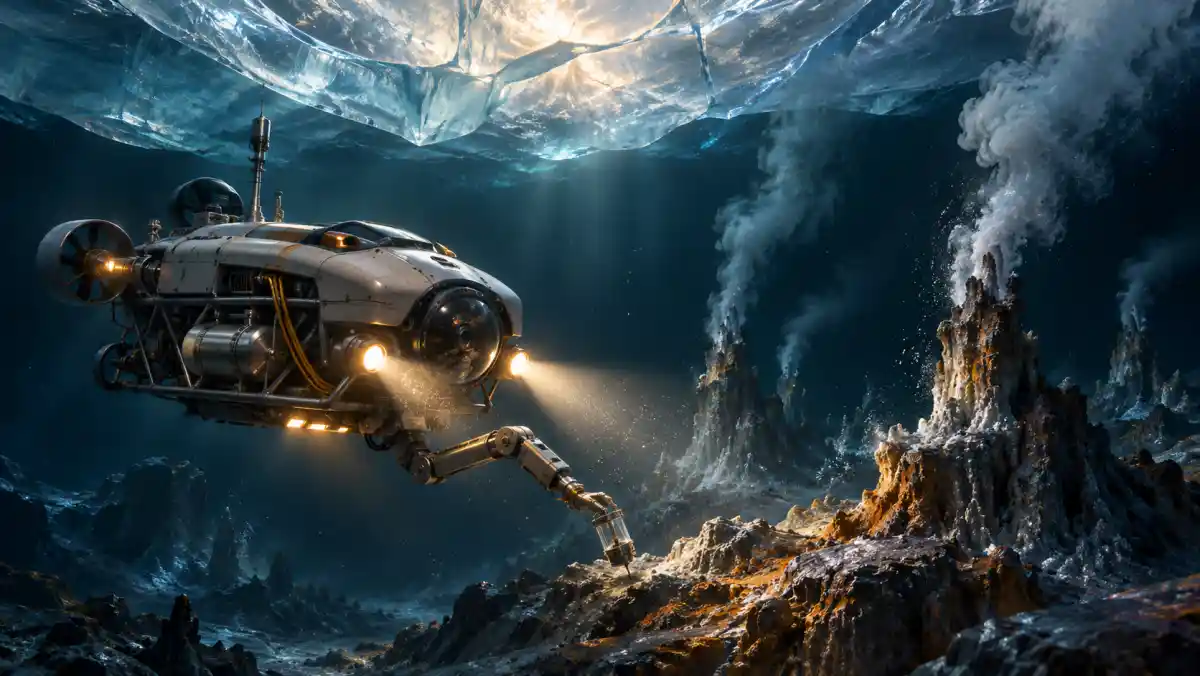
NASA's discussion of ocean access examines the cryobot concept, a probe that would use heat to move through an icy shell. It presents engineering and scientific challenges rather than an operating mission that already samples an alien ocean. The distinction matters. An exciting access concept must eventually show not only that it can reach a destination, but that it can deliver material whose origin and changes are sufficiently understood.
Continue with a paid membership
This full article is included with Explorer, Researcher or Architect.